Why Your Resume Isn’t Working (and What to Try Instead)
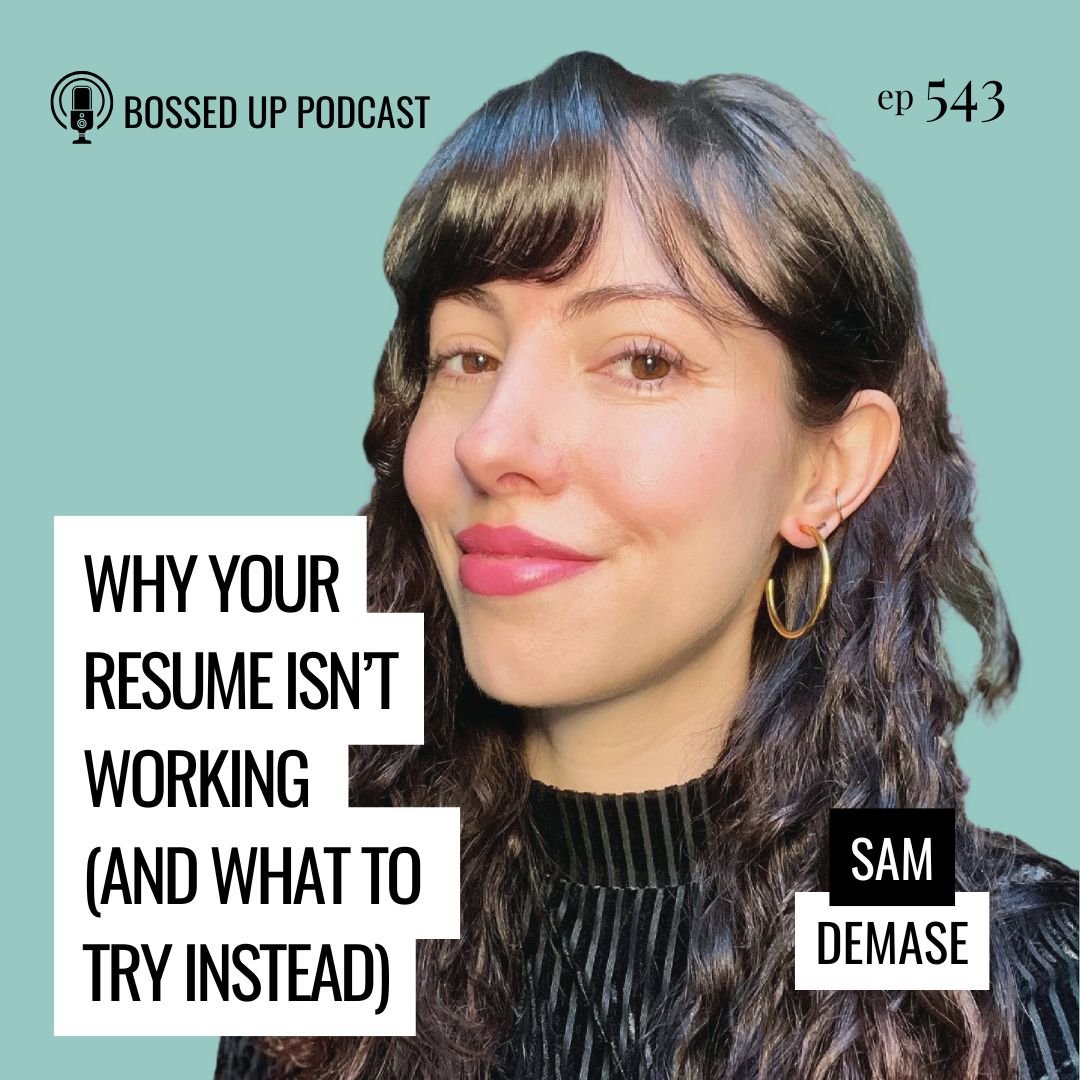
Episode 543 | Host: Emilie Aries | Guest: Sam DeMase
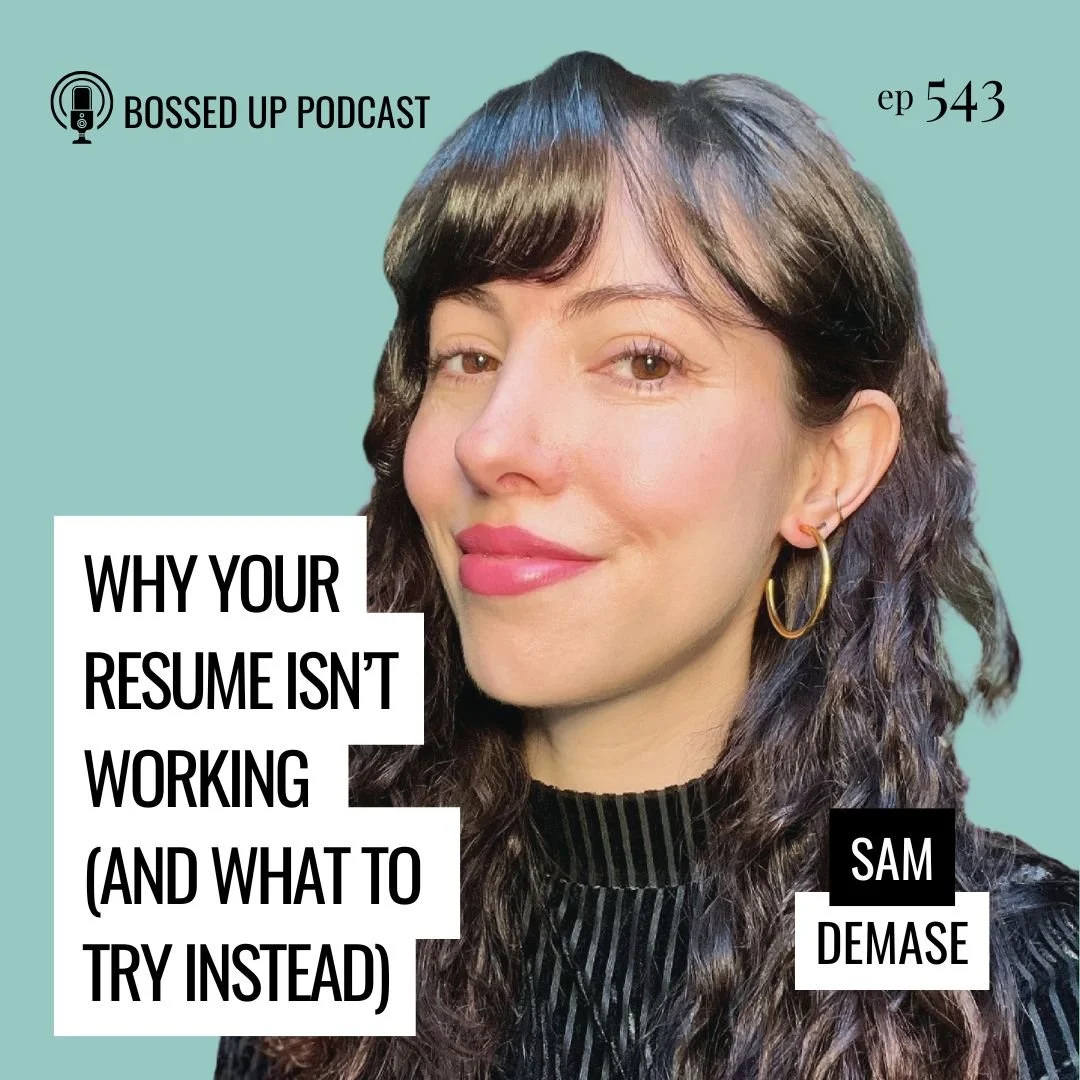
Leverage your strengths, your values, and AI to make the job search less daunting.
The 2026 job market isn’t for the faint of heart. I regularly speak with job seekers and employers alike who are shook by the high volume of applicants, lack of transparency, and general chaos of the hiring ecosystem right now.
Sam DeMase spent more than a decade in corporate people operations and today serves as ZipRecruiter’s first-ever career expert and “Your Career Bestie” on TikTok and Instagram. Sam joined me to share her insights and strategies and prove to you that landing your dream job can still be in the cards.
2026 job market trends
Sam describes most employers’ ideal hire these days as having “the perfect balance of tech and human-centered soft skills”. This makes sense, given the ever-growing impact of AI on the workplace; job seekers need to both excel at leveraging large language models and know how to manage without over-relying on automated technology.
Sam stresses that job seekers need to become specialists; casting a wide net by generalizing your skill set just isn’t going to cut it. This is something I’ve been encouraging my clients to do for years now. It’s hard to find a job, so the natural reflex is to make yourself sound useful to as broad a range of hiring teams as possible. The problem is, that’s also the best way to get lost in the thousands of applications most companies receive for every job post.
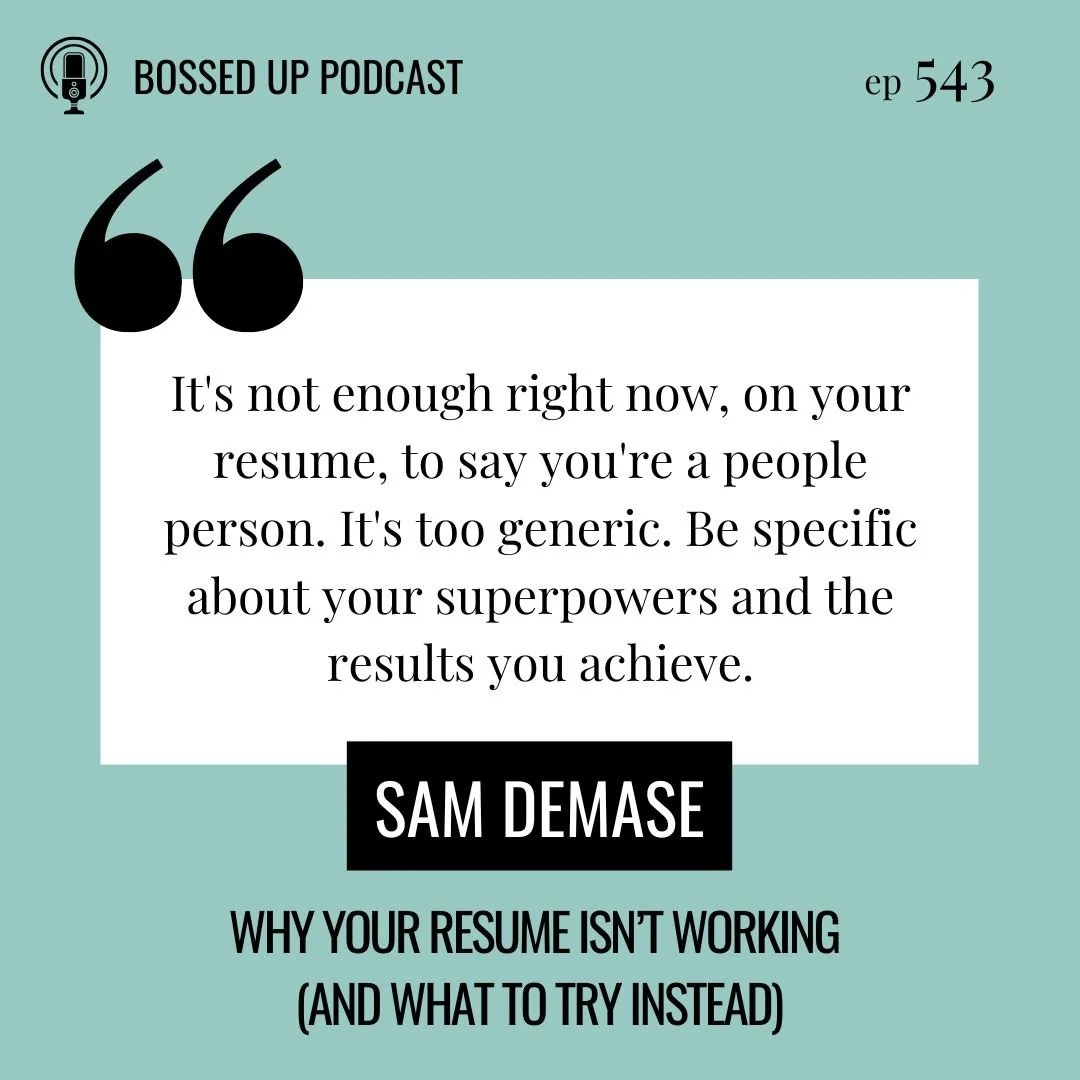
It’s not enough to say you’re a people person, Sam explains. You need to drill down on what each general trait delivers. You are a persuasive communicator or an empathetic listener who’s great at winning over tough clients. Framing all your skills in terms of what they achieve is key. More on that later!
Predictions for hiring in 2026
As the year of a “very tough and chaotic, full-impact” job market continues, Sam predicts three trends that will become more and more prominent:
Companies will continue to prioritize human-centered leadership skills. The good news: women tend to excel here! Traits like strengths identification and change management will be highly valued.
Organizations will seek out new hires with proven expertise in asynchronous work environments. They’ll expect you to prove your value as a remote collaborator, managing teams at a distance and leveraging technology in your processes.
Employers will require experience in managing AI systems in the realm of quality control, output evaluation, and AI ethics. This ties in with what I talked about in Episode 542, Why AI is Giving Women the “Ick”, particularly regarding everyone becoming managers, like Ezra Klein pointed out recently.
In addition to these likely leanings, Sam has her fingers crossed that we’ll see wider adoption of four-day workweeks and flexibility as a baseline requirement rather than something you have to earn or fight for.
I wanted to know what Sam thinks about what I’m calling the “employer clawback of power,” which we’re most often seeing in the form of return-to-office mandates. She’s fairly optimistic about this concerning trend passing in time. The pandemic certainly made flexibility non-negotiable, and companies are attempting to pull back on that now, but forced in-person work doesn’t seem like a sustainable long-term solution to her. However, she acknowledges that the only way we’ll get back the flexibility we need, especially as women with familial responsibilities, is to talk about it, encourage collective action, and put pressure on our employers.
Leverage AI for the job search
Large language models have made it incredibly easy to pump out a generic resume in a matter of minutes. They also help employers comb through the thousands of applications they’re seeing; continuing that cycle, job searchers pack their resumes with generic keywords hyper-aligned with each job posting.
Sam agrees that women are more likely to shy away from AI, a view supported by research like the 2024 Harvard Business Review study I talked about in Episode 540, The Double Disadvantage: AI, Women, and the Future of Work. They’re raising important ethical concerns about its use, but refusing to engage may leave us behind.
Sam recommends we “Use AI to consult, never as your result.” Use it strategically to compare your resume to the job posting and highlight any gaps for you. From there, you can reframe your experience to better suit the position or do some legwork to get up to speed on those missing components.
Refine your value proposition for the job search
Chances are, you already are a specialist in your field. What you need to do is get comfortable with building a resume that showcases just how special you are. To begin this process, Sam recommends fine-tuning your value proposition.
Her simple formula is an excellent place to start:
“Using my background and skills in XYZ, I help companies achieve ABC.”
In addition to helping you narrow down what kinds of companies you’re going to apply to, what I love most about this approach is how audience-centered it is. So often, we avoid “bragging” about our specific achievements because we’re uncomfortable focusing on ourselves. But if we consider how our skills will help the company we’re applying to work for, suddenly, we’re letting our thoughtful, people-first tendencies have the floor. Describe those skills and achievements in colorful detail, Sam says, to build a value proposition you can truly stand behind and market. Put another way: “Own your superpowers.”
Should you have multiple resumes?
Sam advocates for doing away with the whole “fresh resume for every application” approach and sticking with a single one, making only minor tweaks when needed. If you’re truly aligning your search with your value proposition, you shouldn’t need multiples.
I thought this was great advice, but I pushed back: what if you’re considering pivoting into something new? Don’t you need a resume for the usual jobs and one for the new ones? Sam sticks with her initial recommendation. If you’re going to pivot, she says, then that new resume is your only resume. Your experience hasn’t changed, after all, just how you’re going to frame it.
Let go of job search guilt
You probably know some career monogamists, or maybe you are one. These are the people who refuse to leave even a job they hate. For these people, Sam recommends something I often tell my clients as well: you don’t need to quit your current job to look for a different one. Searching for something new and better while you continue in a mediocre position is a low-risk, high-return practice.
And when it comes to making the decision, leaving a job doesn’t mean abandoning your integrity. You can feel uncertain and still do what’s right for you. If it helps, think less about how this new opportunity will help you and more about the positive difference it will make for the people you support: your kids, your partner, your aging parents. Better hours, better pay, or a more flexible environment will improve their future, as well.
Don’t get catfished by a new job
Sam introduced me to a new phrase: job catfishing. This is where a job turns out to be completely different than the one described in the posting and discussed in the interview. It might seem too good to be true or be packed with red flags.
Signs of job catfishing include vague job descriptions and no compensation or listing a huge range, but Sam says your intuition is the biggest indicator. If the vibes seem off, there’s a good chance something is not right. Much like the career monogamists, keep in mind that you don’t owe a new job anything, especially if the employers were dishonest or vague in the hiring process.
Sam has so many wonderful tips for handling this tedious and often frightening job market; she’s seen the best and worst outcomes. Even in these trying times, she works every day with clients who land their dream jobs, so she knows it’s still possible.
Perfect your value proposition, own your specialization, and narrow your search to only the jobs that fit it. In time, you’ll find what you’re looking for.
What has your experience in the 2026 job market been so far? Which of these trends are showing up for you, and what else are you seeing? As always, you can connect with me directly and join the conversation in the Facebook Courage Community or LinkedIn Group.
Related links
LinkedIn Learning Course, “Get Unstuck: Make a Plan to Move Your Career Forward”
Ezra Klein, “How Fast Will A.I. Agents Rip Through the Economy?”
Episode 540, “The Double Disadvantage: AI, Women, and the Future of Work”
Episode 539, “Managing Through The Millennial Career Crisis”
Harvard Business School, “Global Evidence on Gender Gaps and Generative AI”
Get unstuck: move your career forward on your own terms
-
[CONFIDENT RHYTHMIC DRIVING THEME MUSIC WITH DRUMS STARTS]
EMILIE: Hey and welcome to the Bossed Up podcast, episode 543. I'm your host, Emilie Aries, the Founder and CEO of Bossed Up. And today we want to talk through the state of the job market in 2026 and what you can do to be your own best advocate if you are on the job hunt or thinking about diving in.
[MUSIC FADES AND ENDS]
And yes, we're going to talk about AI's impact on this entire process and how you can leverage the AI tools that are available to us to make the most of a challenging market and a tricky situation here. Joining me to break all this down is Sam DeMase, a career strategist and workplace expert dedicated to helping professionals navigate the modern job market with confidence. As ZipRecruiter's first ever career expert, Sam empowers job seekers with actionable insights, job search strategies and expert advice to help them stand out, land interviews and secure their next great opportunity.
With a background in career coaching and professional development, she's worked with thousands of job seekers providing guidance on resume optimization, interview techniques and salary negotiations. Sam advocates for transparency, skills based hiring and AI powered tools like, ZipRecruiter to simplify the job search process. And she engages with a broad audience of nearly a million followers on social media where she shares career advice and job search insights as your career bestie. Sam, welcome to the Bossed Up podcast.
SAM: Thank you Emilie. I'm excited to chat today.
EMILIE: So first tell me a little bit about you and your background and how you became your career bestie as you go by on the Internet.
SAM: Oh, sure. I mean I've worked in corporate for, I worked in corporate for about 13 years, doing various people operations roles. So everything from human resources, to recruiting, to talent development, to leadership development, which is really my home base. Throughout my years there I really got to see firsthand what it's like to be a woman in the workplace. Let's just say that.
So getting some behind the scenes peeks into how things worked, trying to advocate for my team which was mostly women trying to get women promoted and just running into a lot of doors shut in my face. So having to learn the old fashioned way how to advocate for myself and for others. So picked up, picked up some tips along the way and I continue to do that work and support women in the workplace. I'm also a career expert at ZipRecruiter so I get to talk to employers and job seekers every single day. So I'm excited to talk tips.
EMILIE: That's great. I mean it's such a unique perspective having both sides of that equation represented here because, it does sometimes feel like job seekers feel like employers are out to get them. And man, do I hear from my fellow business owners that the hiring process is just a nightmare these days. So it's, it's kind of funny because you just hear such exciting extreme viewpoints on opposite ends of the spectrum. And as someone who's seeing this from both perspectives, you can probably find the gray that lives in between.
SAM: That's right. That's where I live. I live in the murky middle.
EMILIE: Yeah, it is a murky time too. So what are you seeing as bubbling to the top in terms of trends in hiring and both from the employee and employer side for 2026?
SAM: From the employer side, right now I'm seeing employers really want candidates who strike this perfect balance of technical skills and human centered soft skills. So, bit of both. They really want candidates who are adept in AI, are fluent and prompting, but at the same time can also manage the AI systems and scale them and also be people who know how to communicate well, are people first, are empathetic with high EQ. So those are the highest value candidates right now. People who can strike a strong balance of technical and human centered skills.
EMILIE: Yeah. So interesting. That's a tricky overlap to find, isn't it?
SAM: Can be. And I think you know, and that's just in a very broad sense, right? Like what employers want to see, it really depends on the industry. But for job seekers in general, I hear every day and I see every day that this market is incredibly tough, incredibly chaotic and really full impact.
What you can do that's been helping a lot of my job seekers and clients is be a specialist. Don't be a generalist. Now is not the time to be a generalist. Be a specialist as much as you possibly can. It's not enough right now, on your resume, to say you're a people person. It's too generic. Are you a persuasive communicator? An authentic people first leader? Are you an empathetic listener who wins over all the tough clients? Be specific about your superpowers and the results you achieve.
EMILIE: I have been ranting on this podcast for years that this self protection mechanism of trying to stand for everything so as to not turn anyone off attracts no one.
SAM: That's right. [LAUGHTER]
EMILIE: And it worked. It's as relevant for leaders in the C-suite as it is for job seekers anywhere. Because you have to be able to put your stake in the ground and say, I know who I am and I know that might turn some people off, but the opposite of that is also true. You're going to attract the right opportunities. It just, it feels so scary to do that in an environment that feels so competitive, right?
SAM: It does. But also it's freeing and it's exciting to be a specialist and to own what you're good at. I think candidates right now are so stressed about what they're not good at at, or the interview question that's going to stump them or the thing the one tech they don't know that they forget to know what they are good at and be able to speak to their superpowers in a really clear way. So it's so important.
EMILIE: So important. That's what you're seeing in the job market thus far. What do you expect to see when it comes to hiring through the rest of the year?
SAM: So as we go through 2026, I do expect to see a couple trends. Three things. One, human centered leadership skills are going to become more valuable with the rise of AI. And you know who has soft skills like that? Women. So I really hope that that's an opportunity to see more women in leadership and more people recognizing the talents of women, auditing their promotions and making sure there's more equity there. But yeah, skills like people first leadership, strengths identification, change management, and developing the next generation of leaders are going to be high value skills throughout this year and into next year.
The other skill set I know is going to be in demand and I feel confident about this is going to be asynchronous work experts, anybody who can prove their value as a remote collaborator. You know, how do you get the results, what tools do you use, what processes, how do you manage remote teams? That's going to be high value. And then taking a step further from simple AI prompting, I think managing AI systems, quality control, critical AI output evaluation, creating AI ethics boards and bias prevention. And I want to see women at the forefront of that.
EMILIE: Amen. I love how these trends really speak to the importance of both management skills and leadership skills, right?
SAM: Yes.
EMILIE: Like those human centered leadership skills are so important to not only have, but to be able to articulate that you have them right and not take them for granted as we have been conditioned to do. And then management. You know, when I think of AI, I heard this take from Ezra Klein on his podcast a couple weeks ago and I was just like, oh my god, this is the take. If you're managing AI agents or asynchronous work with humans, by the way, right? Either or. We are all now managers. So we have to get really damn good at project management, program management, people management, AI management made us all kind of get a promotion into management. And so how many of us know great managers? Not that many. You know, not, not that many. So if now every individual contributor has to become a great manager, we have work to do and women have an opportunity to shine. I agree.
SAM: 100%. Something I'm manifesting, um, that I don't know, I can't guarantee, but it's something I'm hoping for is a four day work week when it comes to corporate. Also flexibility as a baseline requirement. I mean women need it, of course. So I'm tired of flexibility being a perk or something that's earned. I don't think that that is sustainable, fair, equitable. So I'm hoping that we do see more flexibility as a baseline and we're going to see a lot more consulting in people who have a corporate gig and a consulting gig at the same time.
EMILIE: Yeah, yes, yes, yes. Portfolio careers, something we covered here recently. I'm right there with you by the way, on that front. I wanted to ask you about the employer clawback of power that I've seen or that, that's how I'm characterizing the return to office mandates that we're seeing come through. I think it's this like, great negotiation standoff between labor and management. What do you make of that situation?
SAM: I think it's cyclical, so I don't think it's forever. I think we saw in the pandemic a lot of employee power flexibility as a mandate. Now as a reaction to that we're seeing, you know, employers wanting to take back some of that power with return to office mandates. I don't see that being attractive or sustainable as a permanent solution. So I think I do know that it is cyclical and it will come back. We need to be talking about it just like we are right here, right? Like we need to be talking about it encouraging collective action, encouraging systemic change, putting pressure on employers. You know, we need to be involved in the process of calling out things that we don't agree with.
EMILIE: I love it. And things that disproportionately negatively impact women and marginalized folks. Right. Because that is one of them. What do you make of just the high volume nature of hiring these days? Because that's the biggest complaint I hear about is that job seekers are like, I had to put 600 applications out before I got an interview. Like, what the h*** is that? About. And employers similarly, uh, are just like, we posted a job, an open position, and we got a thousand applicants in week one. I gotta shut this down because there's no way we can parse through it all. So the high volume nature of all of this is so relatively new. It feels like it's stumping everybody.
SAM: It does. And Emilie, you alluded to this earlier, but it's actually feeling broken on both sides in some ways. Like employees and job seekers feel that, you know, the search is a pain. They're getting ghosted. They're having to spend months and months searching. When they do get something, they get AI generated emails or no feedback at all. And then employers at the same time are getting flooded with hundreds of resumes that are generic and not specialized. So they can't find you. Even if you are the amazing candidate that they're looking for that can solve all their expensive problems, they can't find you. So it's not working on either side as well as it could. So I do believe change is on the horizon, but that's going to take time.
EMILIE: Let's talk about AI's role in all of this because I waffle some days I'm an AI optimist and futurist and like, wow, this is going to be the solution to so many problems. And sometimes I'm like, we've sowed our own destruction. Like we've created our own end times here. And with hiring, this great sort of generalization of everyone does feel like it's part and parcel with the AI revolution, right? Like if we are all trying to get our resumes through ATS systems, right? And we know AI is being used in hiring and screening.
But then you're saying we should be specialists and own our special sauce. Like there is this inherent conflict there where job seekers do feel pressure to generalize themselves to be palatable, but also just really aligned with the job description. So of course employers are getting a bunch of generic AI written resumes and it just, it does feel like a race to the bottom in some ways. So what's the advice now for the job seeker? Like, how does she find that balance between specificity of knowing herself and doing what she's got to do to get past those AI bots in that first screen.
SAM: Yep. Since employers are using AI to filter candidates in, you know, she, the candidate needs to be using AI strategically, I like to say use AI to consult, never as your result. If you use AI to produce a final result, you're not going to make it where you want to make it in the process. But if you use AI strategically, and there's a couple of ways I like to use it in the job search process, you know, make it your ally. I think especially for women, it's scary, and I shy away from it myself.
But I think women need to be AI experts. Like, we need to own it. We need to get in there and not be afraid and, you know, learn how to use it to our advantage and understand where it has its limits. So I like to use it to paste my resume and paste the job description for the job I really want. And ask AI, I like Gemini, I ask Gemini. What critical gaps do I have? What gaps do you see between my resume and the job description? Let me know what those gaps are, please. Whether that's certifications, skills, keywords, and then you can easily fix that. It'll tell you, okay, we're missing this. Think back to your work experience. Where did I have that skill set? Where can I call that out in my work experience bullets? So it can help you be a strategic partner in that way.
EMILIE: Totally. And sometimes it helps you develop your learning path, right? You're like, oh, I need to beef up on this entire skill set. You know, we're not saying to fabricate, you know, skills that aren't there, but that's a really great use case of, of leveraging a chatbot to a large language model to really help you identify your own blind spots. I love that.
And I'm with you on the women need to use AI front. I think women are so much more likely to have ethical reservations, which makes sense. We are, like, destroying the planet one prompt at a time. I get it. And you're opting out of this future that is thrust upon us whether we like it or not. It's not. It's not necessarily going to change that, right? And so there is a, A piece of advice that's hard to give around this, but it is true. Like, women are going to be disproportionately negatively impacted by AI especially. And if we don't up our own literacy on it.
What else do you think job seekers should be doing to balance that specialization and alignment to what employers are looking for? Because that is a very key tension you picked up on. It's like to the person who feels nervous to own her special sauce, you know, like, how would you consult her to not water herself down to try to be palatable to everybody?
SAM: Couple things I would say, write yourself a really powerful value proposition. And once you've written your value proposition, niche down your search. So in the same way that you're niching down and specializing your resume, gotta niche down your job search as well. And some of my clients and job seekers are afraid to do that because they're like, well, I just want to spray and pray and send stuff out. It doesn't actually work, especially not in this market.
So when I say niche down your search, I mean only apply for jobs that meet your requirements and match your value proposition. You're not qualified for every single job. You're not qualified to be spraying and praying anyway. So think about what your value is and then think about three things, what you want in a role, what you want in a company, and what you want in a manager. And write down all of those things, and then you can have a narrow, targeted search that's going to yield you way better results than the spray and pray approach, as we call it.
EMILIE: Yeah, I love that advice. And I just released a course with LinkedIn Learning that has a similar piece of guidance in there around your value proposition, which is like really knowing your strengths and then being decisive about where you focus your attention as a job seeker, right? Or as a pivoter of any kind. I call it aim high compromise later. It's like, aim high only apply to the things that you care about and apply the h*** out of those things, right? Like, some job seekers that I've worked with have said, like, oh, is it too much if I follow up? Is it too much if I network my way to an internal referral? I'm like, is it too much? I said, I say back to them, how much do you want this job? Like, if it's one of the jobs that meets those requirements, you do everything you can to get that job. You know what I mean?...
SAM: That’s right.
EMILIE: …And higher volume. That spray and pray approach does not provide the safety net you think it does.
SAM: One hundred percent. It does not. It's a waste of your time and it forces you to have multiple resumes, which is a question. I get a lot too. Like, do I need multiple versions of my resume?
EMILIE: Oh yeah. What's your take on that?
SAM: You really don't. But you can make minor tweaks…
EMILIE: Okay, okay.
SAM: …if you want to be get an A plus, make some minor tweaks. Because here's the thing. Your experience doesn't change. So you're. It's static. So you're not touching that part of your resume. All you're editing is the upper third, what we call the upper third, where your headline is your about me is. And your areas of expertise are if you have a skills based resume, which you do need now. So yeah, all you have to edit is a little bit of your upper third. If you want to tailor it for a job you're really excited about, you don't need multiple different versions of your resume because to me that tells me you do not have a specialty.
EMILIE: Yeah, that's interesting. I really agree with the skills based resume like, format and the upper third, especially a career summary. I mean, if you think about it, just where does the human eye start? People are glancing at that upper third anyway. Good luck if they make it halfway down the page.
SAM: Yes.
EMILIE: So I think you're right to say don't over invest in the whole reconstruction project. I would push back on the multiple types of resume thing because I want to hear what your thoughts are in this use case. A lot of my clients, especially us middle aged millennials, at this point we're having like full on millennial career crises. Like mid, midlife crises seems appropriate too. But you know, we're calling it a millennial career crisis instead and we're reevaluating everything we've invested in thus far.
If I've become a specialist in labor law and the idea of getting another position as an attorney makes me want to claw my eyes out like that person as a job seeker, you know, oftentimes I find her saying, well, here's my resume. If I continue down the path I've been going down, which I'm exploring, maybe I can find a less toxic attorney position. Sure. A less toxic law firm to work for. And then here's my pivot resume. If I'm going to go on a totally different path into politics or advocacy or public policy, right? And so that's a reconstruction project, wouldn't you agree?
SAM: That is. Yep. But I think then you only need that resume because it sounds like she's not going to be an attorney. She's going to be her new thing. So then there's just that new resume. But yeah, that is a use case, right? For like making a whole new resume is if you're pivoting careers. Absolutely. But you get to keep your old skill sets. You just need to reposition them.
EMILIE: Totally, totally. I love that advice. What do you think holds the average job seeker back from doing that? Like what gets in their way from your standpoint? The clients you work with, the job seekers you hear from, what are their common challenges that trips them up?
SAM: Big challenges right now. And a lot of my clients are millennial women is imposter syndrome and not wanting to take credit for their work. And it just takes a conversation with someone like me, or maybe your bestie, or just some. A coach just to really help you zoom out and step away from it. You're so close to your work sometimes and you're so bogged down and so jaded by it, you can't see your own impact.
So when I work with clients, I'm able to say, hold on, you did what? I just worked with somebody who like, didn't have any scope or context on her resume. But she, it turned out she worked with multimillion dollar clients, crazy numbers and really big names that we were able to drop on her about me section. And none of that was in there at all because she was so bogged down in the day to day. By the time we transformed it, it was unbelievable. The before and after. I see it every day. I see it every day.
EMILIE: It's like the art of bragging on yourself.
SAM:Yeah.
EMILIE: Really. Be a podcast we do here, it should be.
SAM: Yeah, it happens to everybody. It's a common thread.
EMILIE: I actually see it most prevalent among the high achievers.
SAM: Yes.
EMILIE: At points of transition. It's like, so common. It's like when you have to sell yourself like we have to in the job market. People who hate sales are so turned off by that concept that they go, oh, this is just how I do my work. You know, it's excellent, of course, but like, that's what I expect of myself. Nothing to write home about. And you have to shake them by the shoulders and be like, no, you don't know. Your pluralistic ignorance is getting in your way. You think everyone else is doing the same and they're not, let me tell you, you know?
SAM: One hundred percent.
EMILIE: So holding that mirror up for people is such a service. It's such a, it's such a gift to do that for others.
SAM: I love to be able to do that. I. I say my superpower is helping other people own their superpowers. So it's…
EMILIE: Aww, it's such a great way.
SAM: …Thank you. It's fun. I'm lucky.
EMILIE: So you introduced me to a term called job catfishing, which I hadn't heard about before, and I'd love to unpack. Tell me more about what that is and what on earth we can do about it.
SAM: Yeah. So unfortunately, job catfishing is on the rise. So what that means is you're a job seeker. You see a job posting, you interview for it, maybe you get hired, and then you see that the job is not what it was pitched to be. It is something totally different. So you get catfished, like in the same way you would get catfished on Tinder or whatever.
So there are ways you can, you know, of course, be on the defense and be able to protect yourself from getting catfished. And I think a lot of those can be obvious. Like when you look at a job description and you see it's really vague, or you see there's no compensation listed on the job description, when it's quite vague and no comp I, my, my wires go up and I say, hold on a sec, my antenna goes up, what's going on here? Sometimes too, if the salary range is huge, like a really huge range, you're like, why is the salary range so huge?
But really the biggest indicator is your gut, your intuition. If you get a feeling that something feels off, it is. If you notice a pattern, something's off in the job description. And then the interviewer reschedules with you a million times. Ghosts you once, talks to you and can't answer any questions about the nature of the role, that's a potential catfish.
EMILIE: Yeah. Not to mention asks for any financial information from you, which they should not, right?
SAM: Yeah, absolutely.
EMILIE: We could take it a step further and say fraud, because that, that's also happening on both ends of the hiring spectrum too. So be careful out there. Whether you're getting taken for a ride or just catfished, you know, those are pretty scary situations. And here's what's so hard. Job seekers are vulnerable. Like, people know that, right? And so, I had a friend of mine whose wife was applying for a role. She had kind of a weird interview process, didn't feel really confident. Super major imposter syndrome going on there too. So that was part of it. But wasn't like, sure how she felt about the company. And then four days later they made her an offer and it was a really well compensated offer. And she like immediately accepted.
And I wanted to be like, that's great. I'm so happy for you. And I also wanted to be like, you're going to keep searching though, right? Because if you get there and it's horrible, like, don't be surprised because you had all these red flags. You ignored them because they, like blew your hair back with a big number. Like, you can just sort of see how this story ends. I hope I'm wrong. I'm not trying to be a jerk, you know? I hope I'm wrong about that. But no job seeker, almost no job seeker that I know is going to turn that down. And so when you're going against your gut, you know, what's the advice there? Because not taking it feels like an impossible, especially for the job seekers. Six months, twelve months into the job search.
SAM: Absolutely. I think keep looking, uh, similar to what you said. So if you have to take something because you have to take it and you've taken a risk and you want to see where it goes, maybe it's going to go somewhere, maybe you can transfer teams internally and it ends up being a win. Maybe you turn it into a win. Keep looking, you know, keep on, keep your search going. Because you don't owe necessarily loyalty. You don't. The times have changed, you know, so keep on looking because you can leave at any time. Leave whenever.
EMILIE: I think that is so important, especially for folks who are like, super hardworking avoidant of the job search itself. I know, I know a couple of folks like this who I've worked with who are like, I call them, like career monogamous. You know what I mean? They've never left a job on their own volition and therefore the job search has been traumatic because it wasn't them bringing themselves to it. So this association is so negative. And then you get stuck in a job you hate and you don't even imagine that you have any choice in the matter. And it's like, you don't have to leave your job to start your job search.
SAM: Absolutely. It's low risk, high reward. Job searching while you have a job is low risk, high reward. I say that all the time. Please search for a job at any time. I'm working with somebody who's thinking about leaving a job that they're less than six months into for an insane opportunity and having some guilt over that. And we talked it through and they're like, forget the guilt, never mind, you know, so you gotta go for it. You gotta do it. [LAUGHTER]
EMILIE: Yeah. I mean, if there's an insane opportunity on the table, how much regret would you feel if you didn't open that door?
SAM: Exactly.
EMILIE: You know what I mean?
SAM: Exactly.
EMILIE: Yeah. It is a loyalty thing, isn't it? And I have high integrity, so I don't feel good about making that choice. I did once do that exact thing. I didn't even start the job yet. I accepted a leadership position in Rhode Island. I was trying to move out of Rhode island to move to D.C., breakup story, high drama, whatever. But I was offered a state director position to stay in Rhode island for this awesome organization. Accepted.
A week later, I got a much lower level, but better paying job in D.C. offered to me and they flew me down and I was like, life in D.C. is like, so worth blowing up this relationship in Rhode Island, you know, not the romantic one, but the one with the poor employer that just offered me this position. And so I had to make that call. As soon as I finalized job offer number two, I called job accepted offer number one and said, I really hate to do this to you, but I have to rescind my acceptance.
SAM: That's so real.
EMILIE: You know? And were they happy? h*** no, they weren't happy. And I had to be like, you hate me. I'm accepting of that. I still love me, but I'm gonna go now, you know?
SAM: Good for you. Good for you for doing what's right for you. And I hope everybody does the same thing because you gotta look out for yourself first.
EMILIE: You do. And it's not like all the time. The phrase that came out of that experience for me was put yourself first. Not always, but not never. You know what I mean?
SAM: Yeah, yeah. Especially in situations like that. If you're not gonna advocate for yourself in that situation, when can you?
EMILIE: Exactly. Life is too short. Like you, I mean, for big, big decisions. Like this is a big decision, leaving a job, taking a new job, those are big, life altering choices. So you want to look out for number one and for, frankly, if you have others that you're supporting, right? To me, that almost becomes an easier mindset shift.
Like as a parent, as a breadwinner, as a partner, I'm like, this isn't just for me. This is like, I need to be doing what's best to maximize my earnings or maximize my, my security or whatever it is for the people I can support, my parents, my nieces and nephews. Like, whoever is in your life. Like, you can not only just do this for you, you can do it for others along the way. Sometimes I think that shift helps women advocate for ourselves a little more.
SAM: Sometimes it definitely does in negotiation too. If you think about it, like you're negotiating for the woman who's going to take this role after you. You're raising the bar for her. So that's, I do that too. And I tell my clients that too. Yeah, anyone who's struggling with they get scared to negotiate. Forget it. It's not about you then. It's for the next girl or the next marginalized woman that's going to take the position after you need to raise the bar for her.
EMILIE: Wow, that's a fabulous take. Never Heard that before. And I feel like I've talked about negotiation and women [LAUGHTER] for like twelve, fifteen years now. I love that take so much. I read somewhere on Reddit the other day, actually, this reminds me, someone built an AI like bot, essentially, whose only job was to email employers with open positions with. I think it was like asking if the salary range was 20% higher than what it was listed. So that they're just creating this environment where they're putting pressure on all the employers to feel like their salaries are too low. [LAUGHTER]
SAM: Okay. Isn't that interesting? Yes.
EMILIE: I was like, they're getting inquiries, like automated inquiries to say, this salary's gotta be 180, not 150, right?
SAM: I like that. Let's put whatever can push it higher.
EMILIE: Yeah. That is so funny. I love this. So for the dismayed, frustrated job seeker who's listening here, Sam, who's like, oh, my god, I am avoidant of this. I am depressed. I am so frustrated by the job search process. That feels inhumane and exhausting. What success stories or words of encouragement would you want to leave?
SAM: Okay, so success stories. I have clients and job seekers every day who are landing dream jobs in this market. So it is possible. What I see them doing well, to land them those jobs is knowing their value proposition. So something you can do today as a job seeker who's overwhelmed, burnt out, is rewrite your value proposition. So you. I like to use the format of using my background and skills in xyz, I help companies achieve abc. So it's very, it's very succinct, it's very short. You know, using my skill sets in digital marketing and content organization, I help companies launch powerfully effective campaigns that drive revenue and unlock new audiences. Whatever it is that you do, whatever it is you do, describe it to me in colorful detail.
EMILIE: Let me pause right there just to say, I love that, that is so audience centered. Did we all hear that? Like, I want to let that soak in. Because the job seeker's insecurity comes from being so obviously focused on yourself because you're selling yourself. So the minute you spiral into this egocentrism in the job market, am I good enough? Am I good enough? Am I good enough? What is it about me that's not resonating? What is about me that's not, you know, getting offers, you lose your empathy for who it is you're trying to impact. And that way of writing a value proposition centers the company. Like, here's the value I create for your organization and that audience centrism makes you so much more persuasive and frankly, gets you out of your own head a little bit more so you can focus on who you're trying to persuade.
SAM: That's totally right. And I think it's just a good mindset shift and it's such a big confidence boost to write a value proposition that you can stand behind and market to companies. And just knowing what you do well and the results you achieve really does transform and narrow down your search immediately.
I would also say the ghosting is tiring. Most people I speak to are exhausted from ghosting from employer ghosting. So I will say ZipRecruiter is doing a great job of starting conversations between employers and job seekers faster because that's how the hiring decisions get made, right? To start conversations faster. So if you are frustrated with the ghosting, use Be Seen First, which is a new zip feature where, once you filter your job search, it will only show you jobs that you're qualified for based on your resume that you submit. And if you see the purple be seen first logo, all you need to do is add a short note with your value proposition why you're excited about the job. It takes two minutes and that note immediately bumps you to the top of their screening list. So that makes you two times more likely to start a conversation with that employer. So if you want to start employer conversations be seen first, I reckon I recommend using it. It's a fun little feature.
EMILIE: Where do you go to get started with that?
SAM: You just go to ZipRecruiter.com and build a profile.
EMILIE: Awesome. I love that so much. Where else can our listeners keep up with you and the great work that you're doing? Sam?
SAM: Oh, yeah, you can find me on Instagram and TikTok at A Power Mood. You can also follow ZipRecruiter on Instagram.
EMILIE: I love it. A Power Mood. What's the story behind that?
SAM: A Power Mood? The story is, I like to channel a powerful mood. So do my friends and so do a lot of the women and folks that I work with. So, we like to channel our power mood era.
EMILIE: I love that so much. As a organizer who got started in people, power and change is what I like to say, right? Like that is you're speaking the language of Bossed Up at its core. I love this.
Learn more and find links to everything Sam and I just talked about over at bossedup.org/episode543. That's bossedup.org slash episode 543. There you'll also find a fully written out transcript of today's conversation and a blog post summarizing Sam's key points. And now I want to hear from you. If you're in the job market, tell me what that experience is like in 2026. How are these trends showing up in your career trajectory? Or what else are you noticing that we might have missed?
[CONFIDENT RHYTHMIC DRIVING THEME MUSIC WITH DRUMS STARTS]
My inbox is always open at Emilie@bossedup.org and you can chime in as we keep the conversation going after each episode in the Bossed Up Courage Community on Facebook or in the Bossed Up Group on LinkedIn. And until next time, let's keep bossin’ in pursuit of our purpose, and together let's lift as we climb.
[MUSIC FADES AND ENDS]